
Genealogies of the British and Irish Kings from Adam
In this book I have tried to reconstruct the ancient genealogies of the Kings of England, Scotland, Ireland and Wales. The aim of the book is to illustrate how generations before us have perceived the world in the context of creation and God's eternal purpose for the nations.
I should add that it is really a reference book with information gathered from primary sources.
Read Old Books as C. S. Lewis Advised
Read Old Books Part 2

Asser’s Life of King Alfred.
In 893, Asser , a welsh monk, wrote a biography of Alfred entitled The Life of King Alfred which is the primary source for Alfred’s life . The original copy was destroyed in a fire in 1731 but enough transcriptions survived to reconstruct the original work. It’s only a short book but amazingly readable, giving the life of Alfred the Great, England’s greatest king. It gives the dates of events but it also puts everything in the context of God’s purposes and how everything that happened was, in some way, a part of God’s plan.
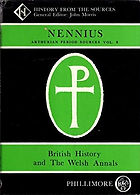
Nennius The History of Britain and The Welsh Annals
The 9th-century Welsh compilation Historia Brittonum (History of the Britons) has been traditionally attributed to the monk Nennius. It preserves early medieval British history, including the earliest known list of King Arthur’s twelve battle victories, and is closely linked textually in manuscripts to the [Annales Cambriae (the Welsh Annals). It is almost unique in its form and content attempting to set the history of the British in a historical and biblical context.

The Anglo-Saxon Chronicle
The Anglo-Saxon Chronicle. is the term used by historians to describe a set of annals in Old English, chronicling the history of the Anglo-Saxons. The first version of the Chronicle, which has now been lost, was created in the late ninth century, probably in Wessex, during the reign of King Alfred the Great. However, many copies were made and distributed to monasteries across England. It is one of the most important documents concerning the history of the British Isles. It interprets history from a creationist point of view, interpreting the ups and downs of the various kings in terms of God’s rewards and judgements.

Geoffrey of Monmouth The History of the Kings of Britain
De gestis Britonum (On the Deeds of the Britons), commonly known as Historia regum Britanniae (The History of the Kings of Britain), is an account of British history written around 1136 by the Welsh monk Geoffrey of Monmouth. Most commentators seem to think that Geoffrey simply had a gift for romantic invention. However I see him as a man who was trying to weave his knowledge of ancient chronicles with his own understanding of how God worked through history, particularly in terms of the conflict between Christians and pagans.

Gildas’ De Excidio et Conquestu Britanniae “On the ruin and conquest of Britain”.
This is a short work written in the 6th century by the Welsh monk Gildas. The book is written as a commentary on the invasion of the celtic kingdoms of Britain by the Anglo-Saxons. It is also a lament for the lost Roman civilisation of Britain that is now just a memory. Gildas chronicles the battles of the Britons against the invading Picts and Scots and blames the British king Vortigern for enlisting the help of the Saxons “a race hateful to God and men” in fighting them. The Saxons prove to be a worse enemy than the Picts and Scots combined and invade the British kingdom. Gildas sees these misfortunes as the result of the the sins of various British kings. He writes not so much as a historian but more in the style of an Old Testament Prophet castigating his people for turning away from God.

Bede’s Ecclesiastical History of the English People.
This is an account of history from an Anglo-Saxon point of view. It’s a history of the development of the church in Britain very much in contrast to the prophetic sermon style of Gildas. However, particularly in its account of the Synod of Whitby, it explains the disagreements between Celtic and Roman Christianity the reverberations of which still echo to this day.

The Prose Edda
Thisis a 13th-century Icelandic textbook for poets that serves as one of our most important surviving sources for Norse mythology. Its purpose was to teach young poets about Norse mythology and history. It’s fascinating to me because alongside the ancient norse creation epic that it recounts it gives a genealogy of ancient men and “Gods” that can be compared to Anglo-Saxon and Celtic genealogies. See the Adam to Alfred the Great chart on the “Useful Charts” page of the Website if you are interested in this. The similarities show us that the information these works were based upon came from a pre-Christian era. Thus we know that some knowledge of their ancestry has always existed in the people of Europe and there are remarkable similarities between some of these genealogies and the genealogies we get from the table of nations in the Book of Genesis in the bible.

Beowulf.
Beowulf is the oldest surviving epic (and longest) heroic poem in Old English. Scholars debate when it was written, placing it anywhere from the 8th century (700–750 AD) to the early 11th century. Beowulf is written mostly in the Late West Saxon dialect of Old English and is set in 5th and 6th century Scandinavia. I am mentioning it here because one of my beliefs is that dragons are the same thing as dinosaurs. The writers of the epic have several words to describe the different types of dragon, or serpent, that the people of the poem were dealing with. These descriptions are first hand descriptions of creatures that we would call both dragons and dinosaurs. You can find a chart comparing dragons and dinosaurs on the useful charts page of the website.